Forensic Psychology
From Significance to Action: Understanding Divergent Pathways
Why the same event can produce very different interpretations and behavioural responses.
Read articleEdit a local copyArticles and perspectives at the intersection of psychology, education, forensics and business.
Forensic Psychology
Why the same event can produce very different interpretations and behavioural responses.
Read articleEdit a local copyBusiness Psychology
Power can shape attention, decision-making and accountability in organisations.
Read articleEdit a local copyEducation & Learning
How assessment can clarify learning needs without overlooking individual strengths.
Read articleEdit a local copyWellbeing & Resilience
Resilience involves flexible responses, support and opportunities to recover.
Read articleEdit a local copy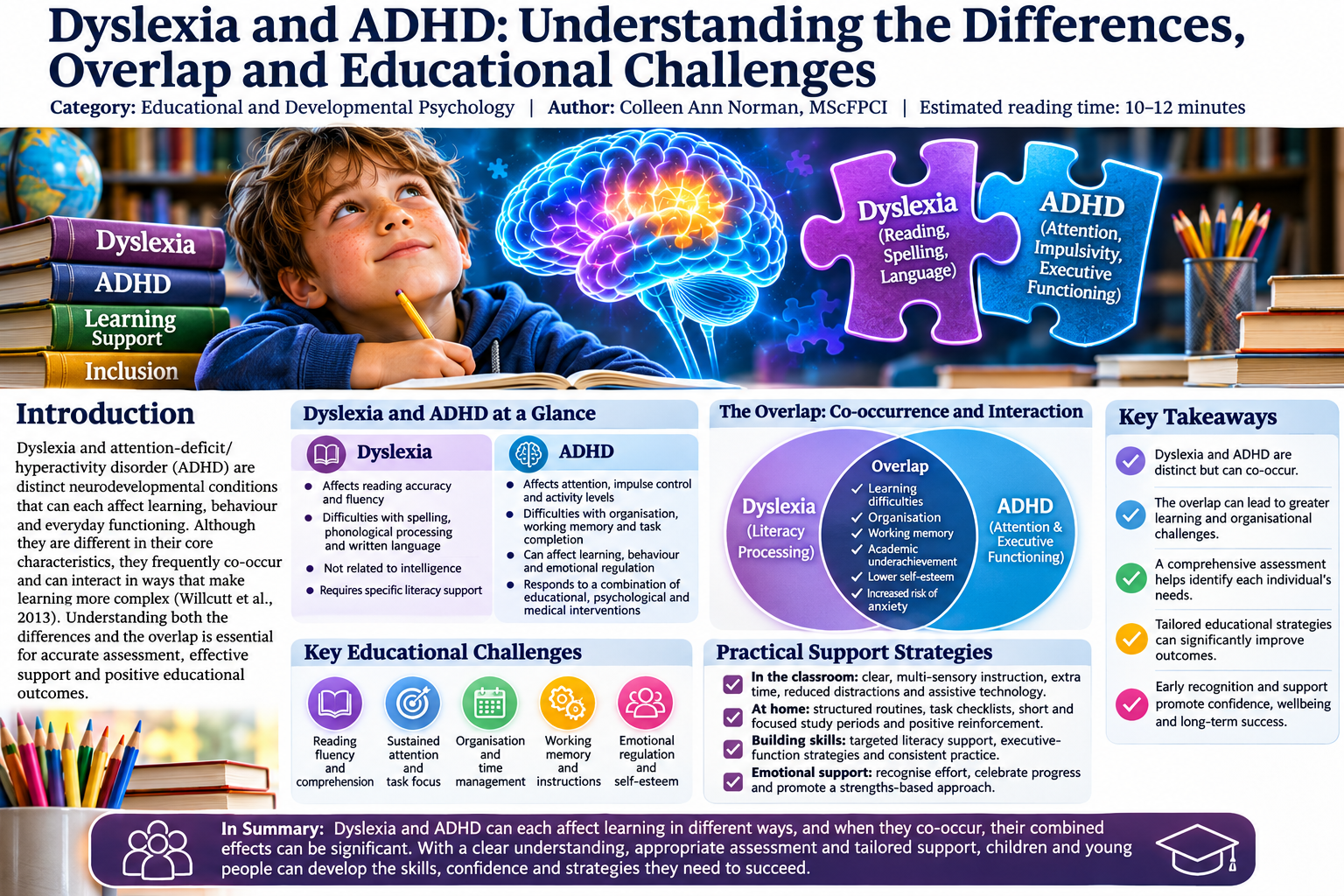
Education and Learning
Dyslexia is a difference in the development of accurate and fluent word reading and spelling. It is not a measure of intelligence or effort.
Read articleEdit a local copy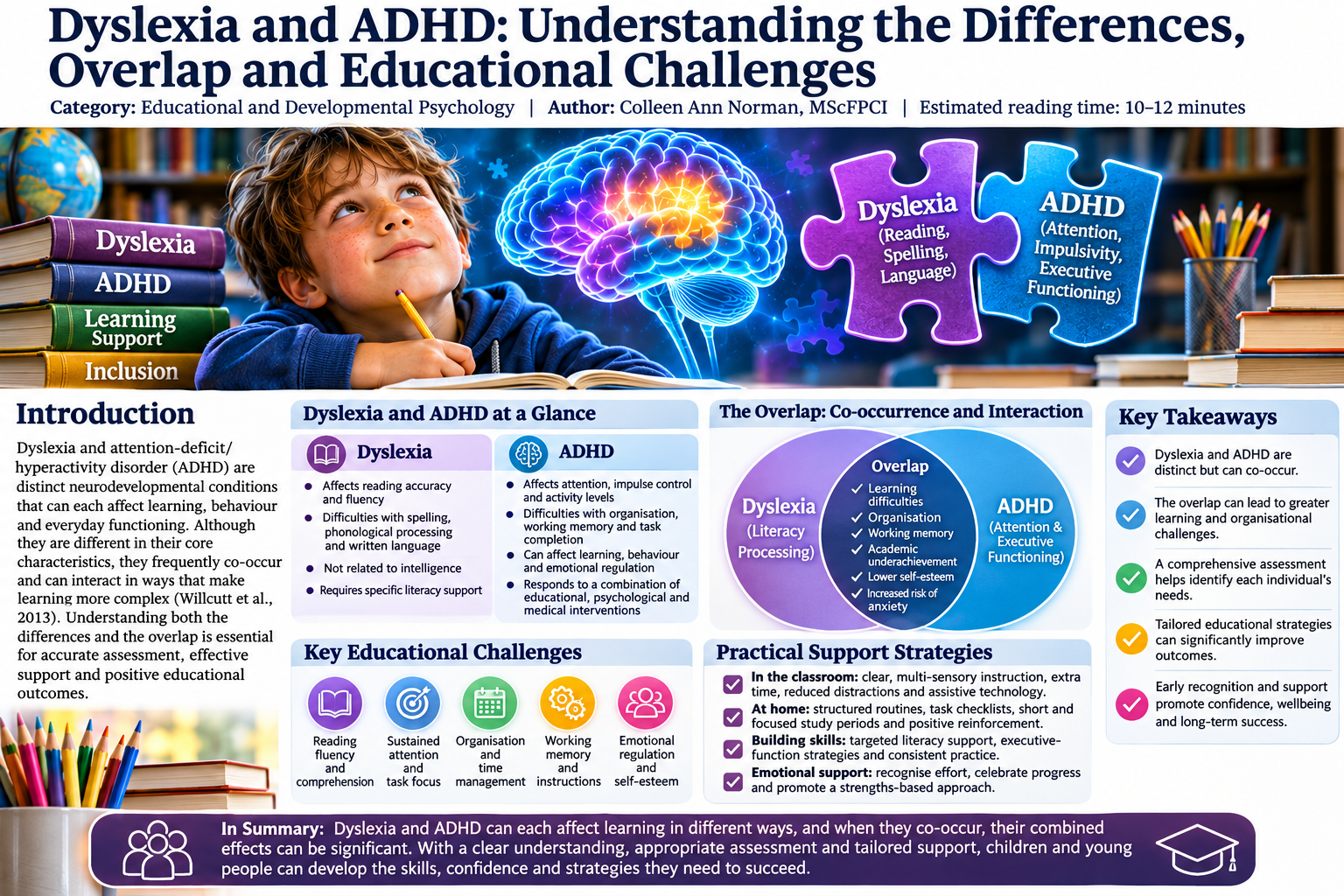
Neurodiversity
Dyslexia and attention-deficit/hyperactivity disorder (ADHD) are distinct developmental conditions, but they can co-occur. Recognising their different effects helps avoid inappropriate support.
Read articleEdit a local copy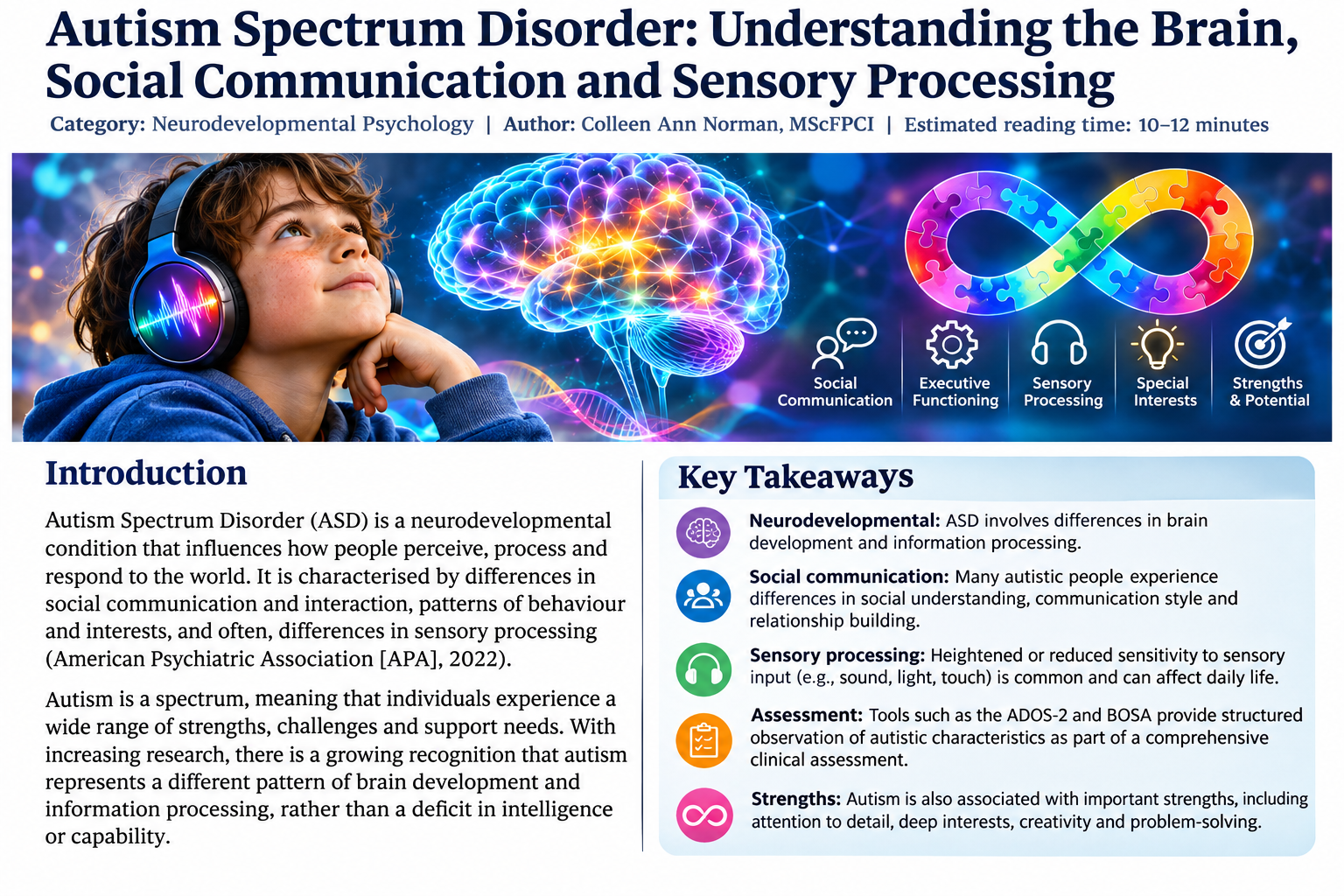
Autism and Neurodiversity
Autism is a neurodevelopmental condition characterised by differences in social communication and patterns of interests, behaviours and sensory experiences. Autistic people vary enormously.
Read articleEdit a local copy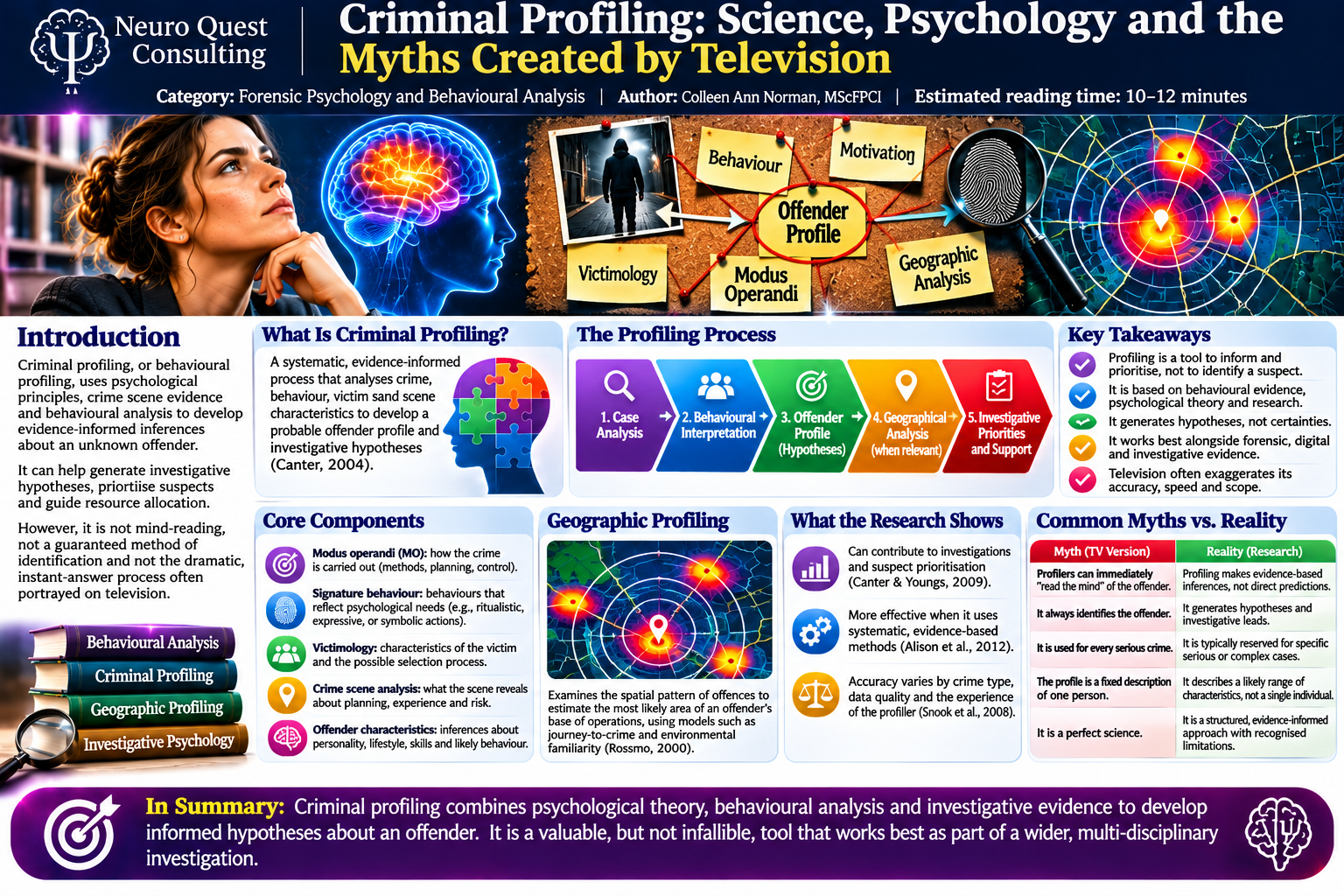
Forensic Psychology
Criminal profiling seeks to generate investigative hypotheses from behaviour and case evidence. Television often portrays it as near-instant mind reading; responsible practice is more cautious.
Read articleEdit a local copy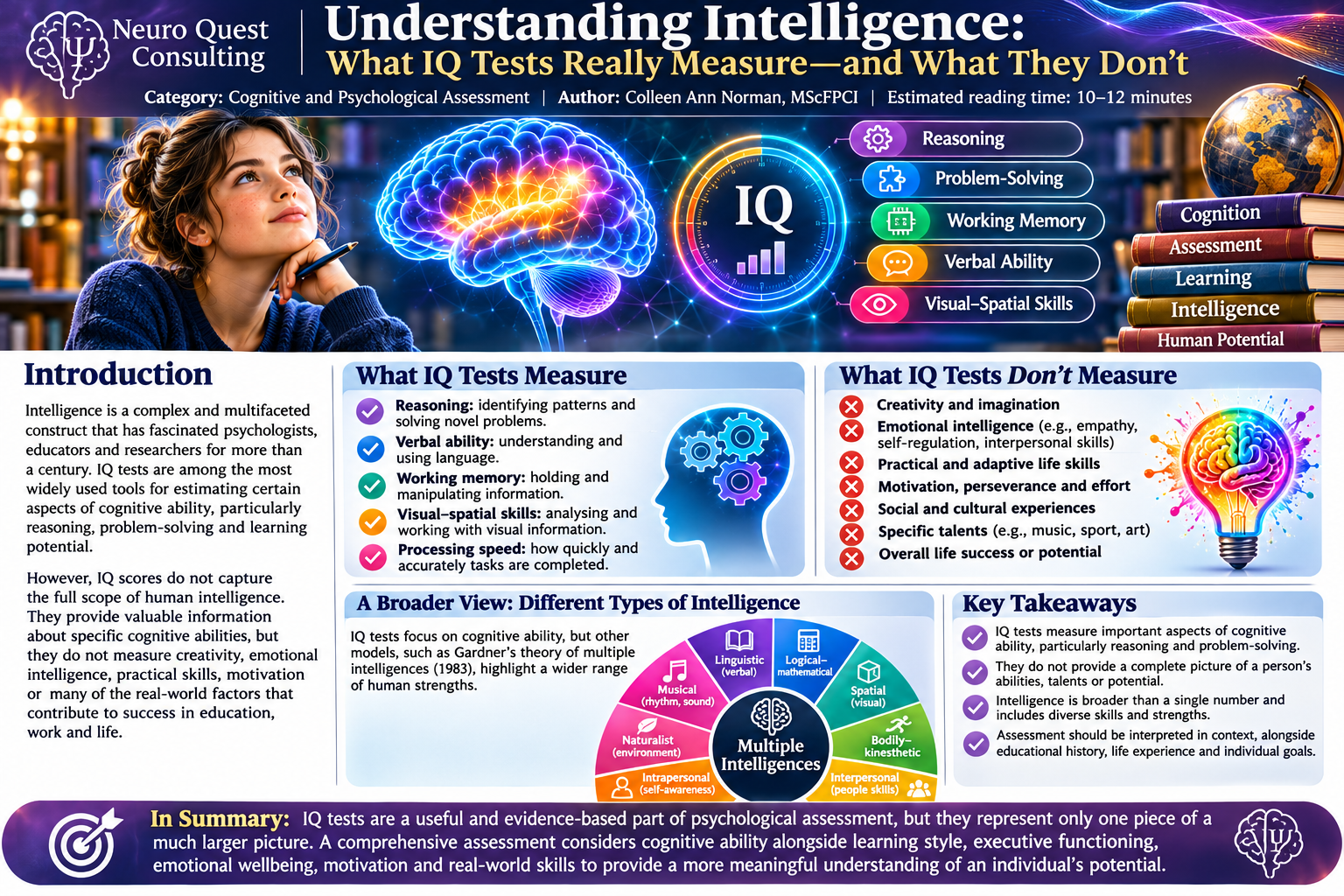
Ability Assessment
Intelligence testing can provide valuable information about cognitive functioning, but an IQ score does not capture the full range of human capability.
Read articleEdit a local copy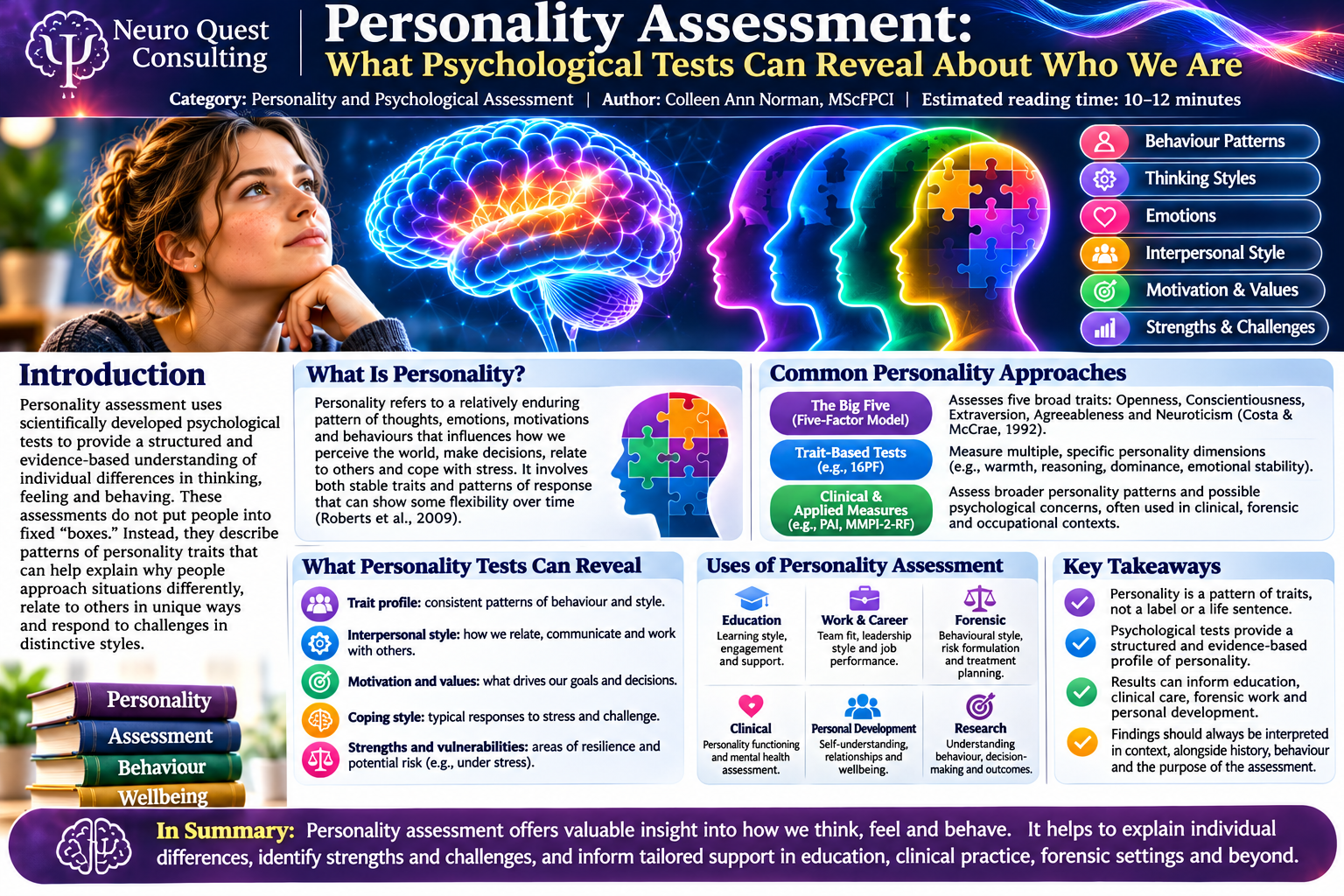
Personality Assessment
Personality measures describe relatively consistent patterns of thought, emotion and behaviour. They are tools for understanding tendencies, not fixed labels or predictions of destiny.
Read articleEdit a local copy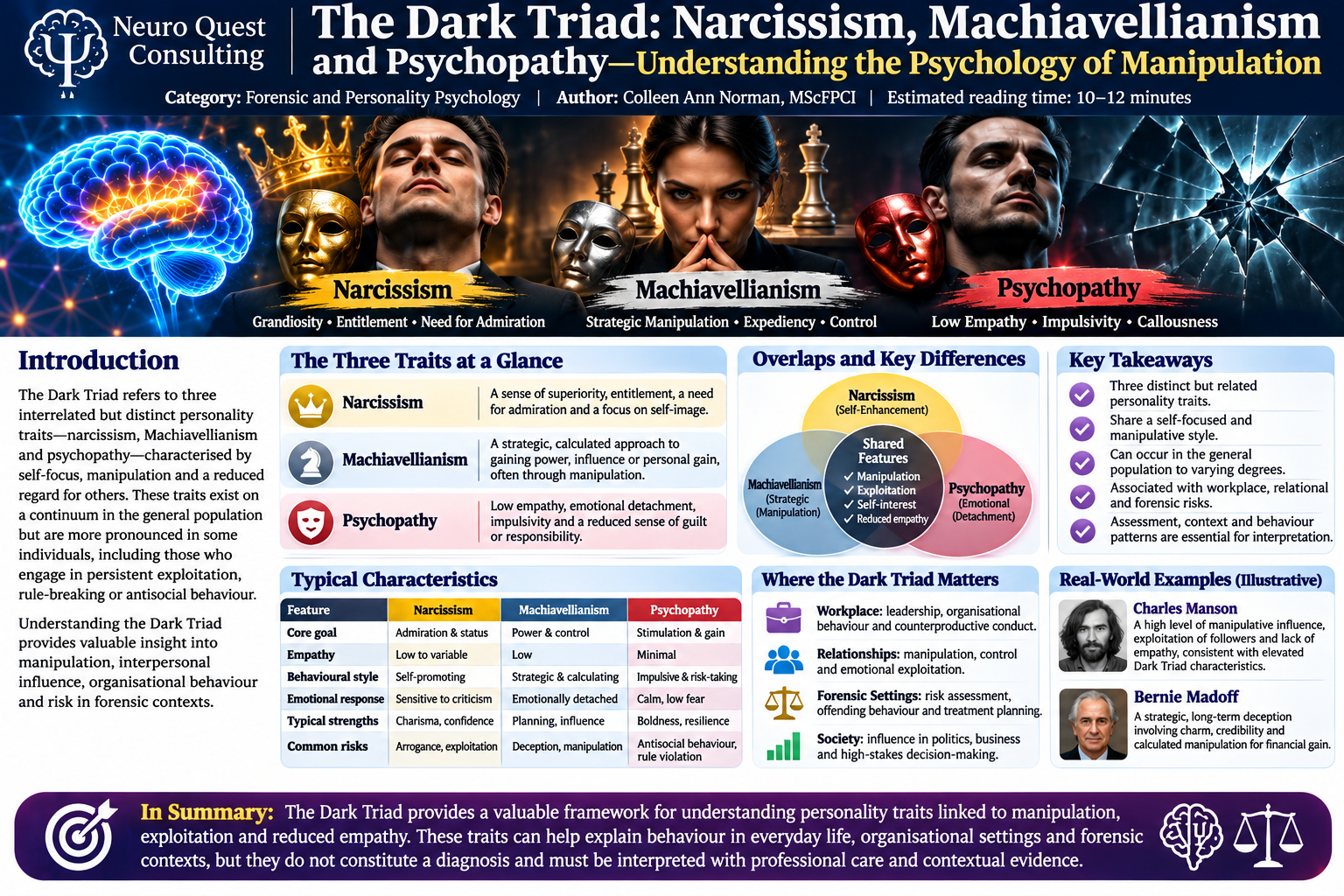
Personality and Behaviour
The dark triad describes three overlapping but distinguishable personality constructs: narcissism, Machiavellianism and psychopathy. The terms are often misused in popular discussion.
Read articleEdit a local copy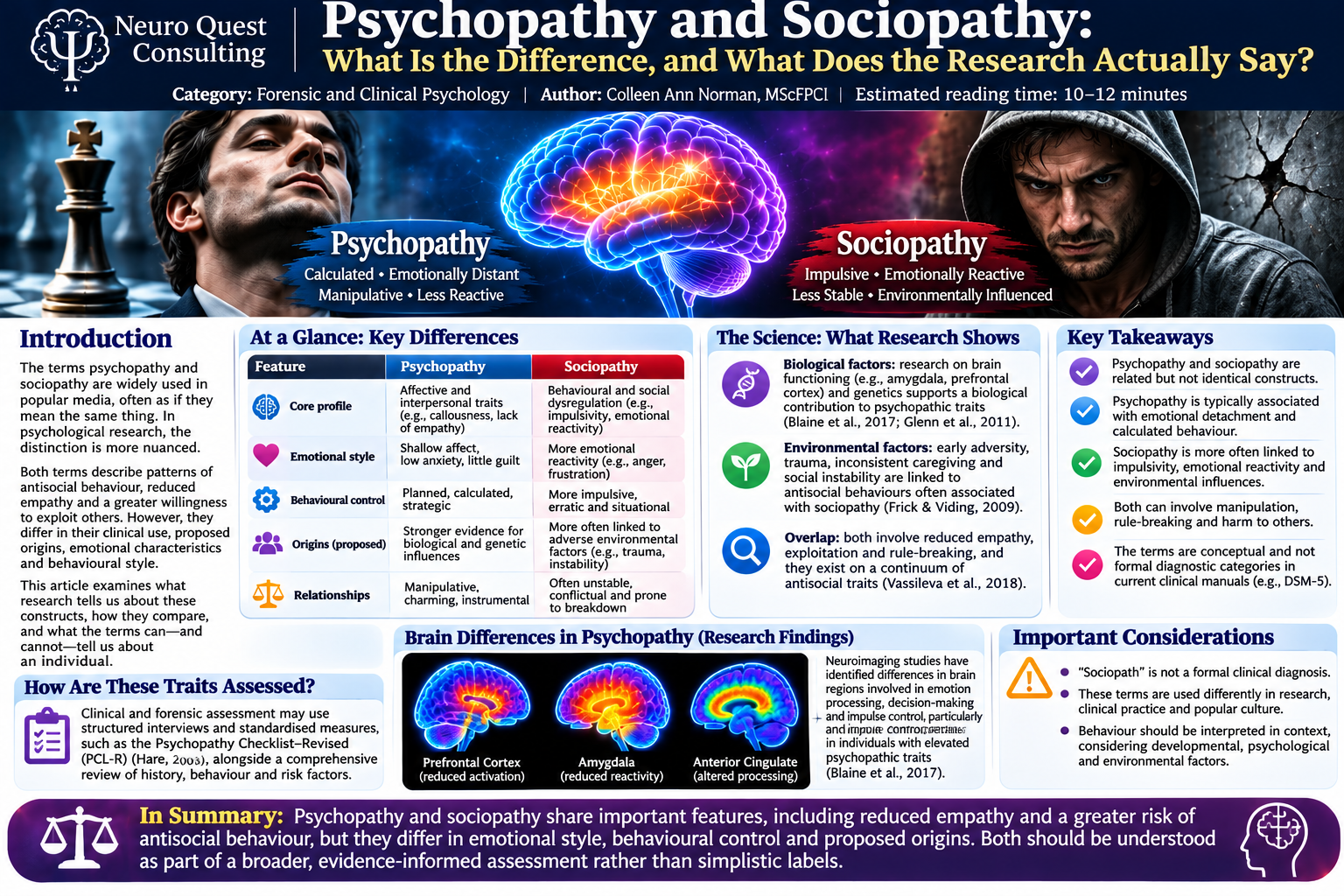
Forensic Psychology
Psychopathy and sociopathy are often treated as synonyms, yet their scientific and clinical status differs.
Read articleEdit a local copy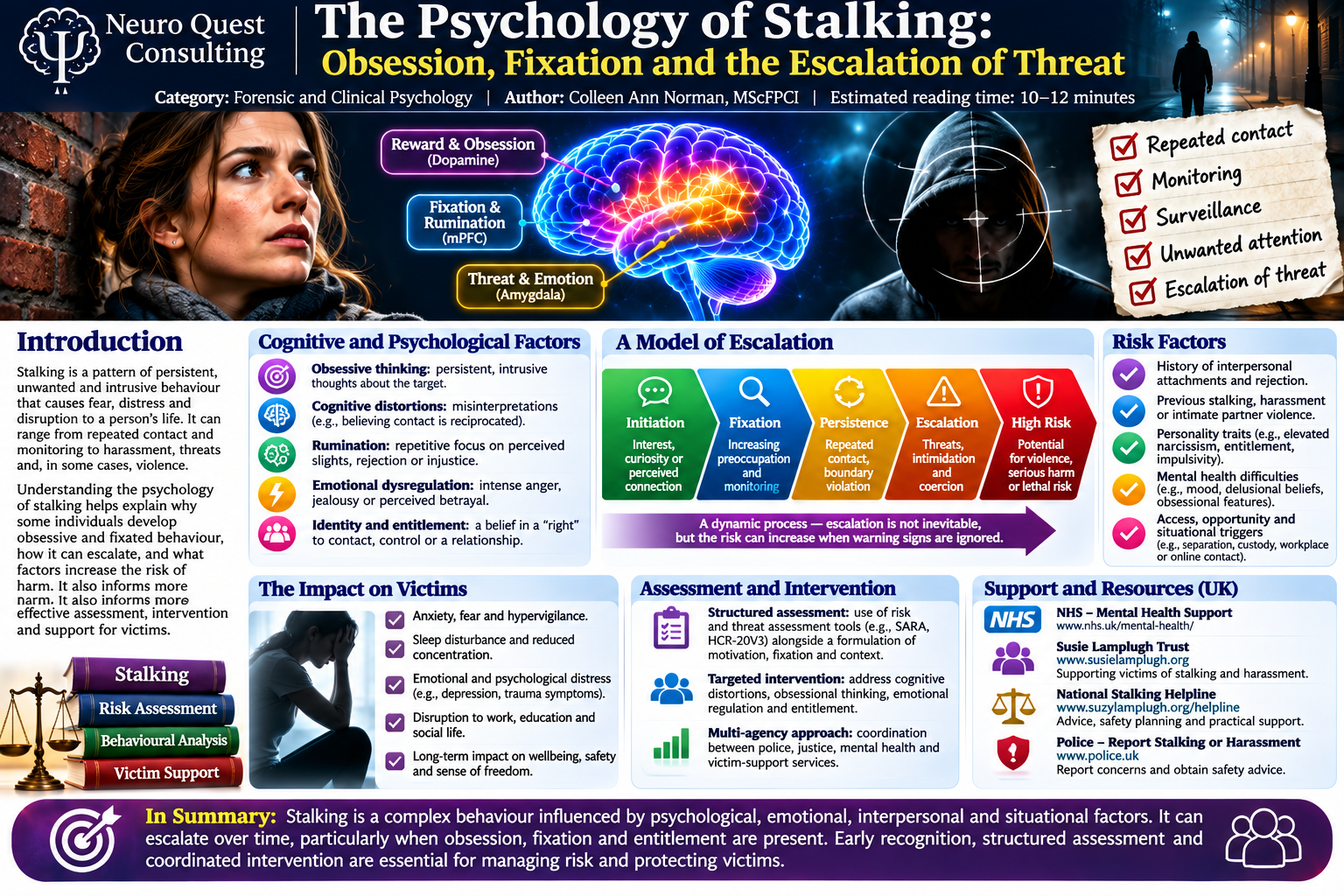
Forensic Psychology and Safeguarding
Stalking involves a pattern of unwanted, intrusive behaviour that can cause fear or distress. It should be taken seriously even when individual acts appear minor in isolation.
Read articleEdit a local copy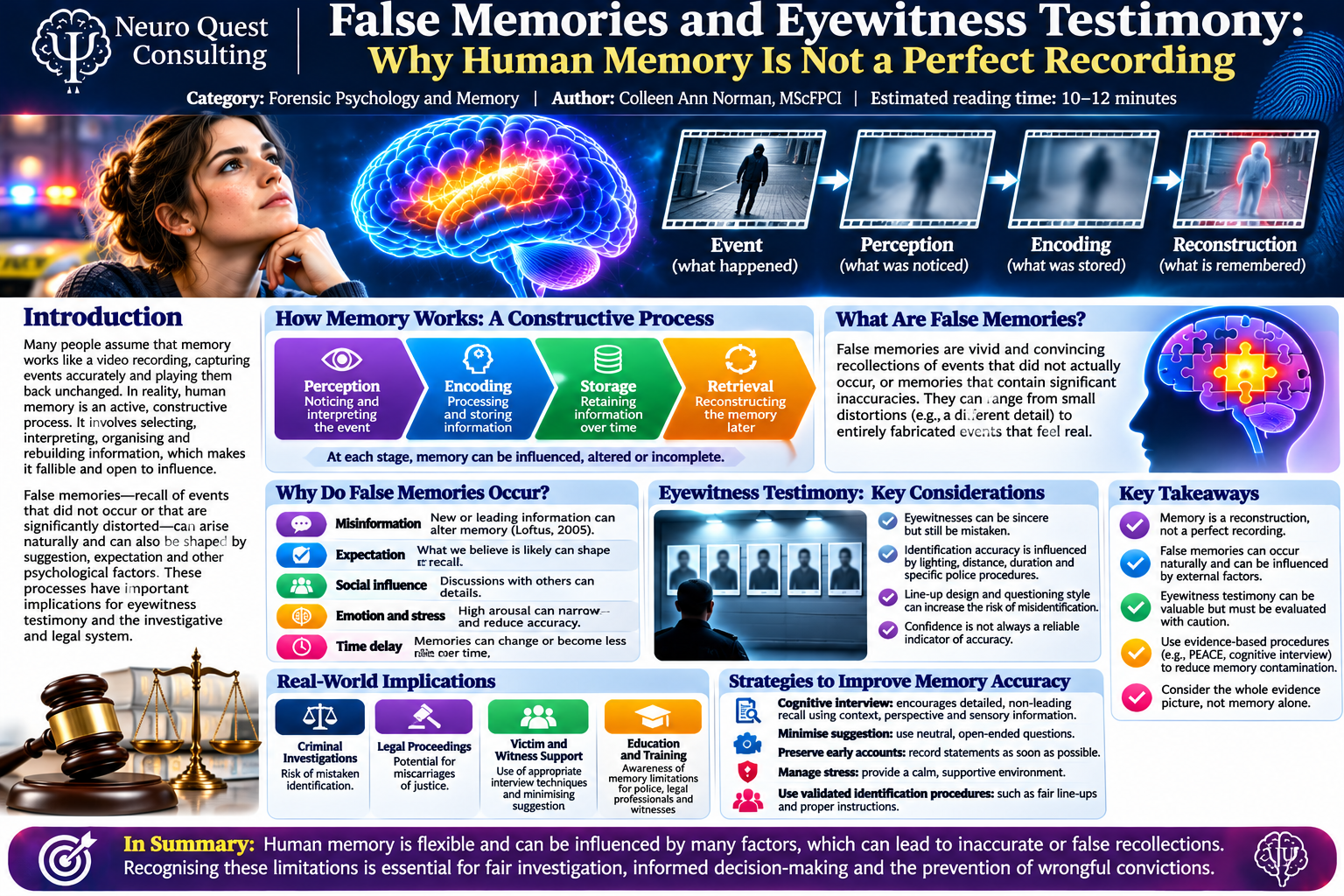
Memory and Forensic Psychology
Human memory is reconstructive. Remembering involves retrieving and rebuilding information rather than replaying an exact recording.
Read articleEdit a local copy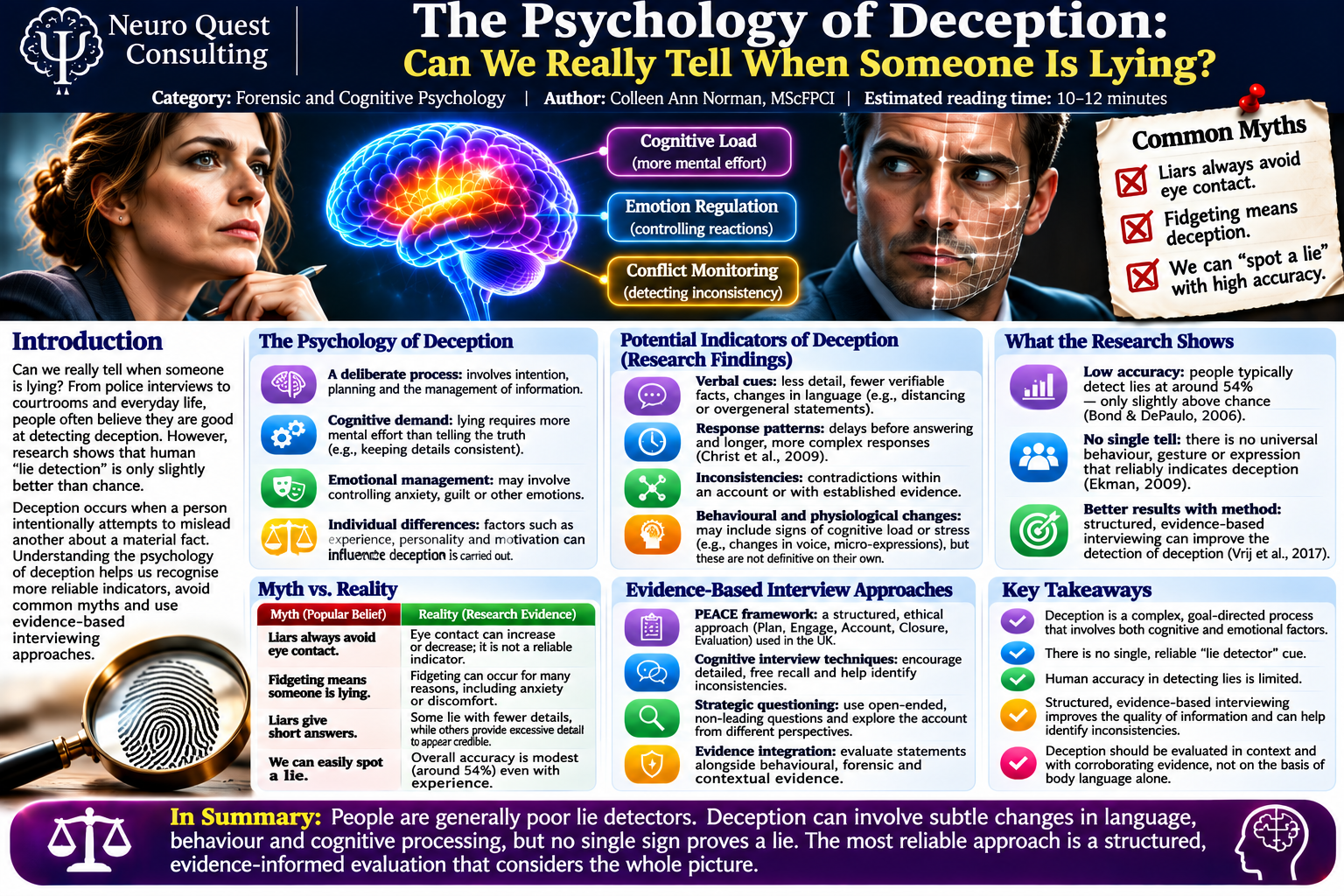
Forensic Psychology
People are generally less accurate at spotting lies than popular culture suggests. There is no single facial expression, gesture or speech pattern that reliably proves deception.
Read articleEdit a local copy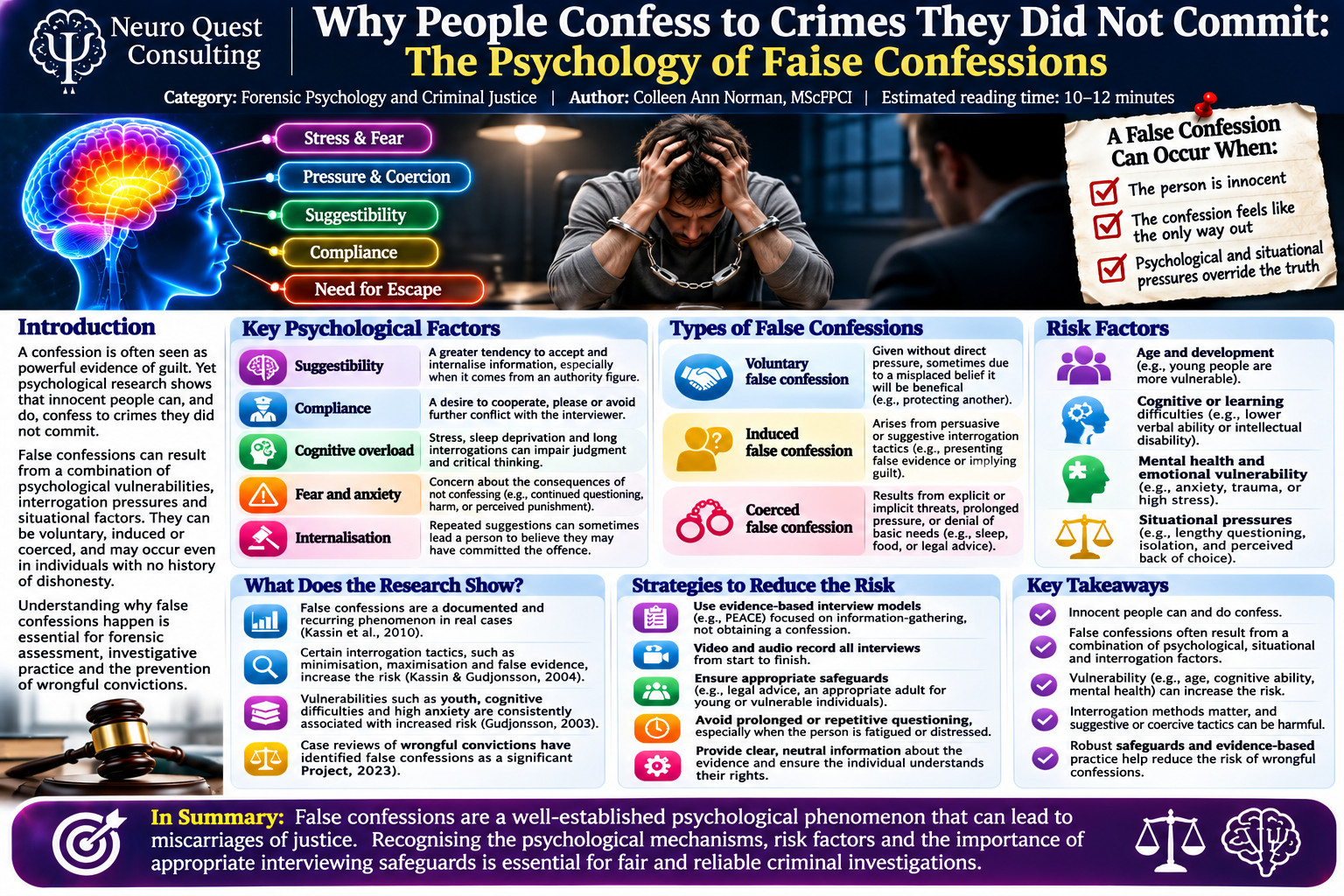
Forensic Psychology
False confessions demonstrate that admitting guilt is not always equivalent to having committed an offence.
Read articleEdit a local copy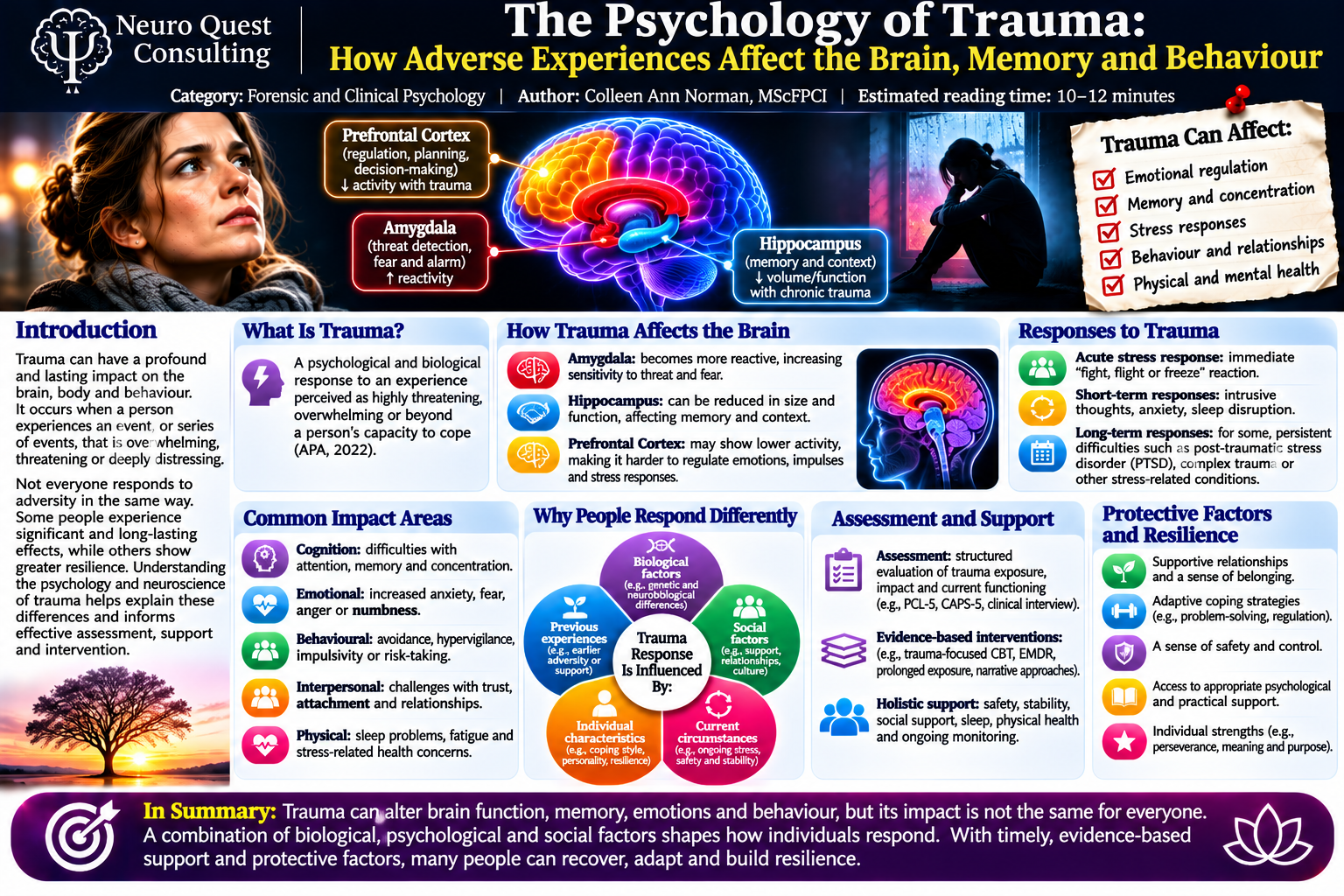
Trauma and Wellbeing
Trauma can affect attention, emotion regulation, sleep, relationships and the way threatening experiences are remembered. Responses vary widely between people.
Read articleEdit a local copy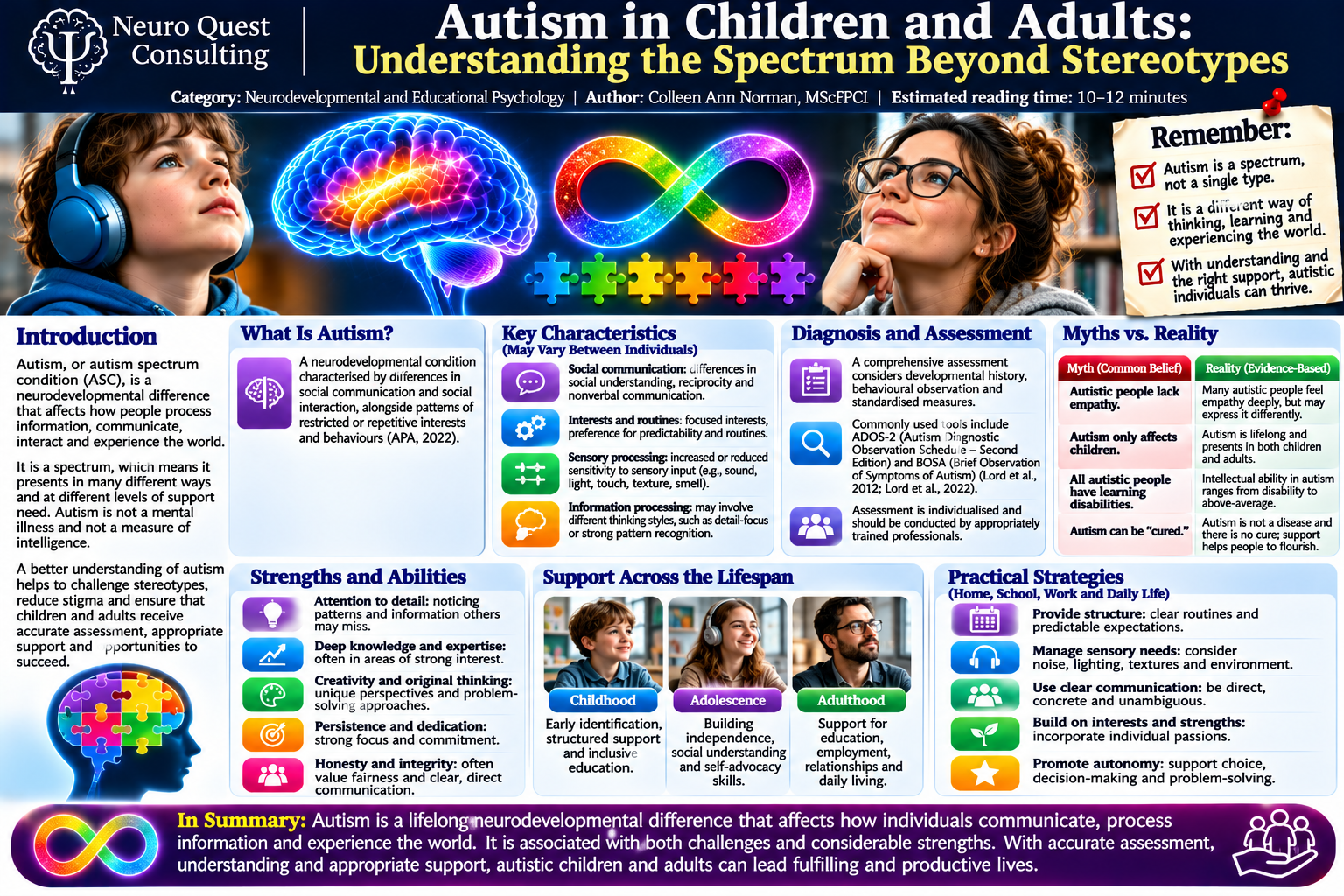
Autism and Neurodiversity
Autism can present differently across ages, environments and individuals. Some people need substantial daily support; others are independent but face less visible challenges.
Read articleEdit a local copy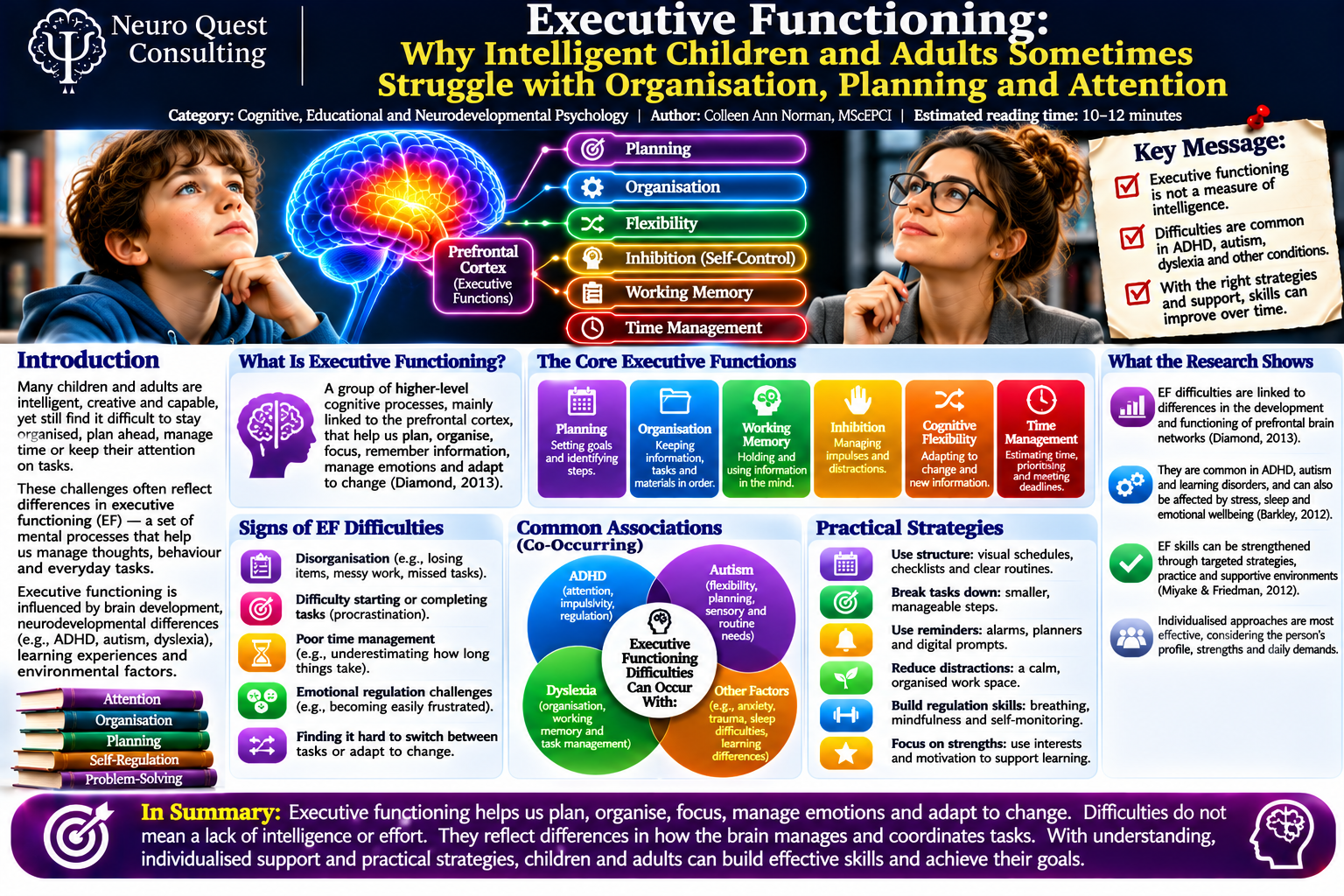
Learning and Cognition
Executive functions are cognitive processes that help us plan, start tasks, manage time, regulate responses and adapt to change.
Read articleEdit a local copy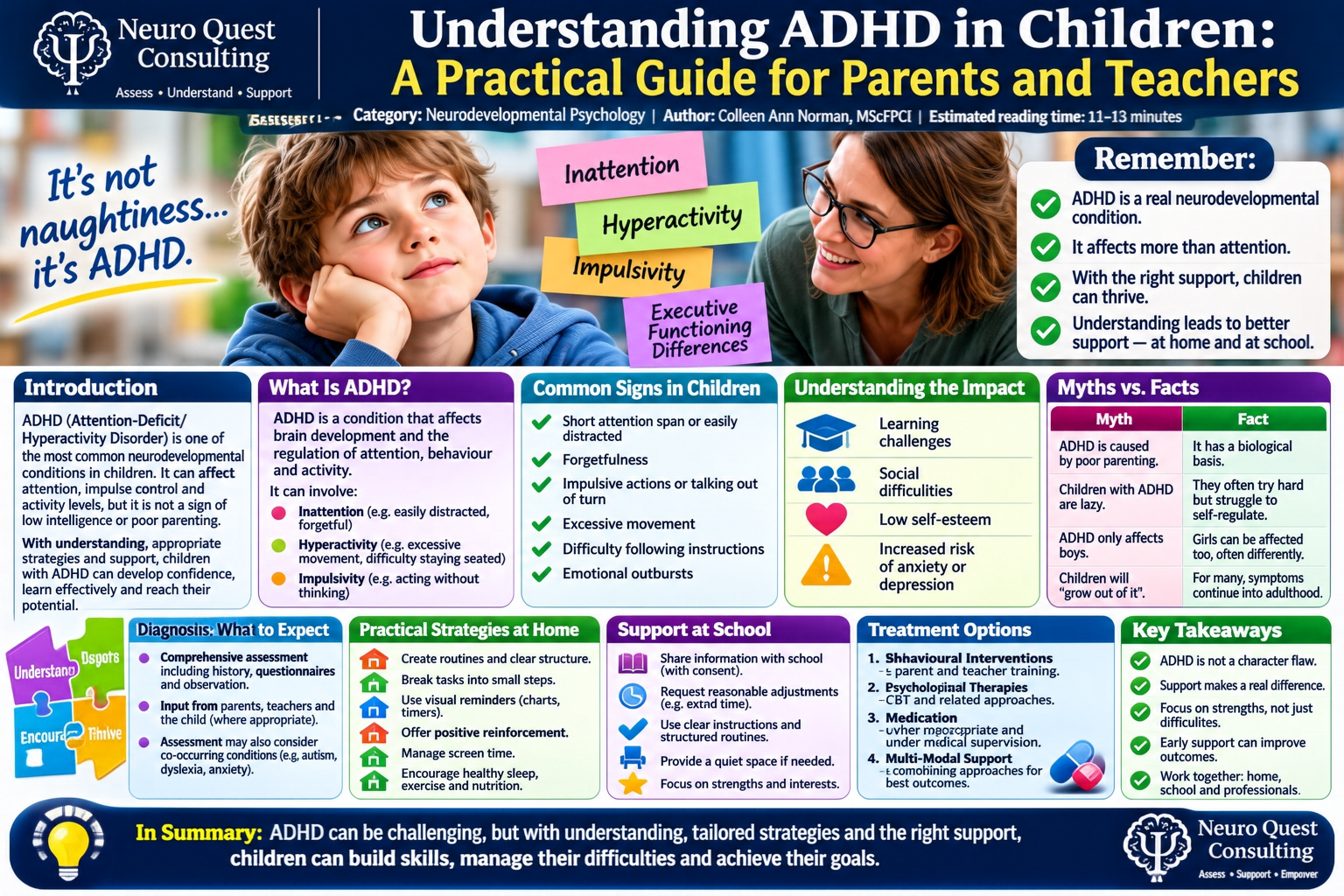
ADHD and Education
ADHD is a neurodevelopmental condition involving patterns of inattention and/or hyperactivity-impulsivity that affect functioning. Children can have very different presentations.
Read articleEdit a local copy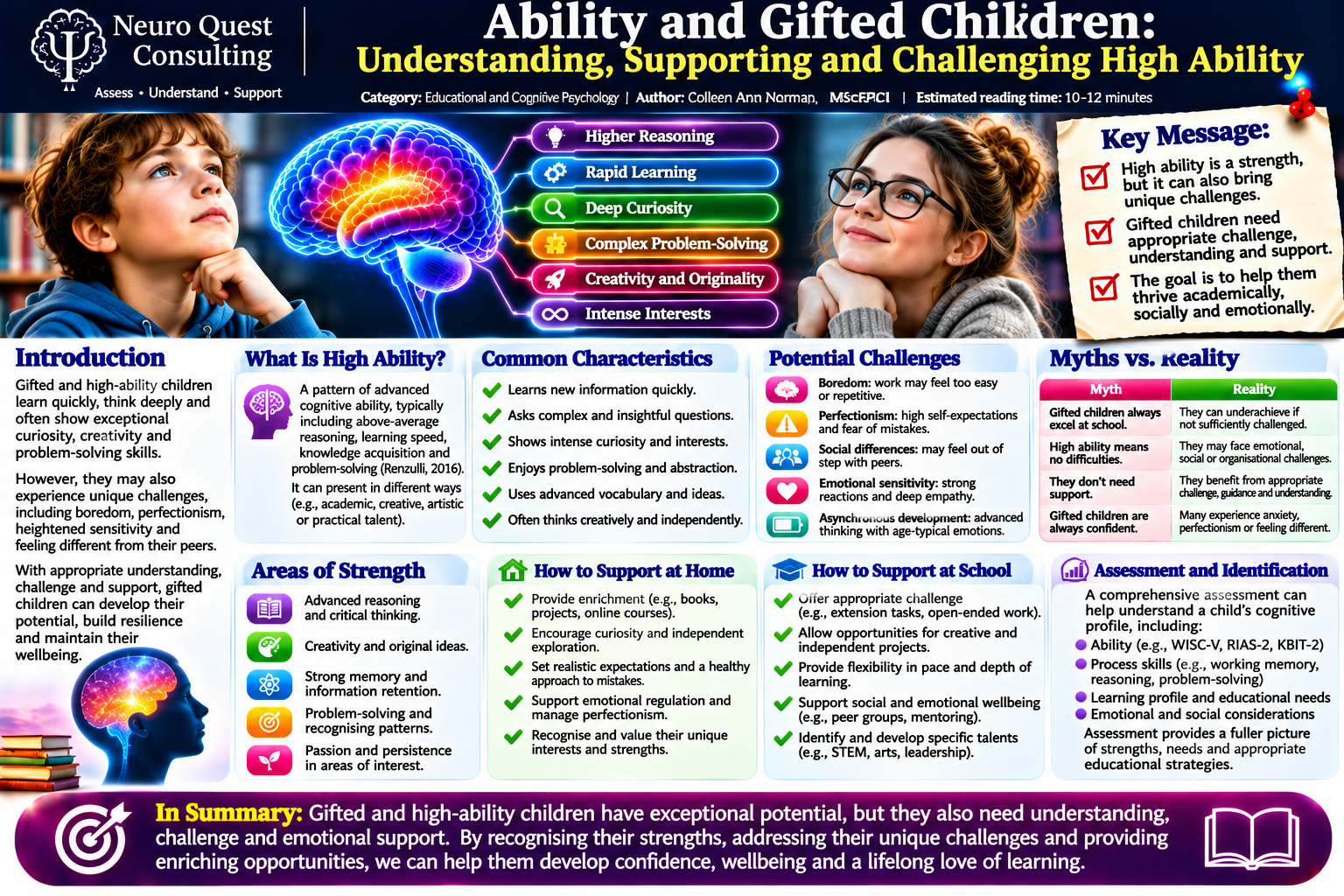
Gifted Education
Children with high ability may learn rapidly in some domains while developing at an ordinary pace in others. High potential does not eliminate emotional or educational needs.
Read articleEdit a local copy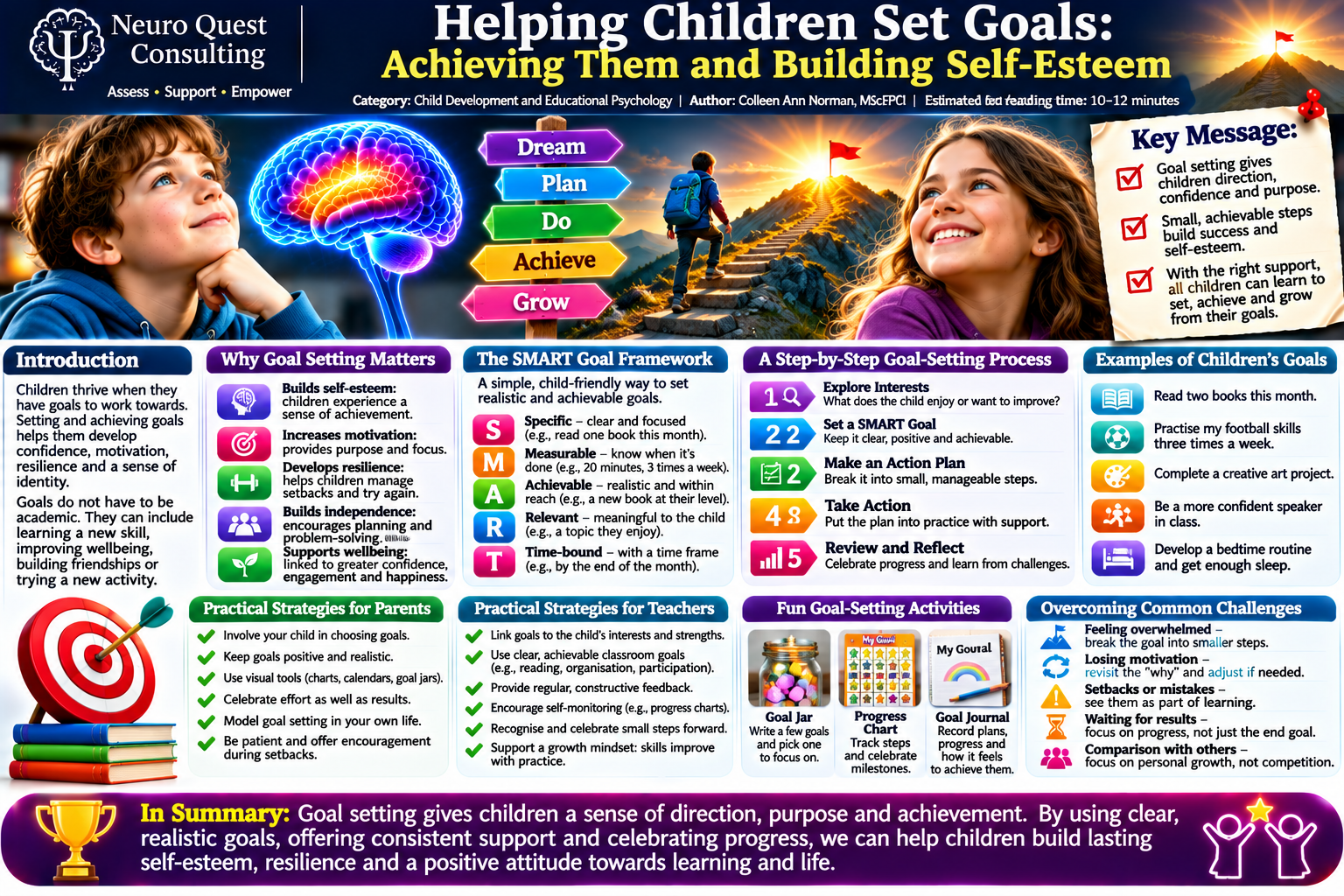
Child Development
Goal setting can help children develop agency, persistence and confidence when goals are realistic, meaningful and supported.
Read articleEdit a local copy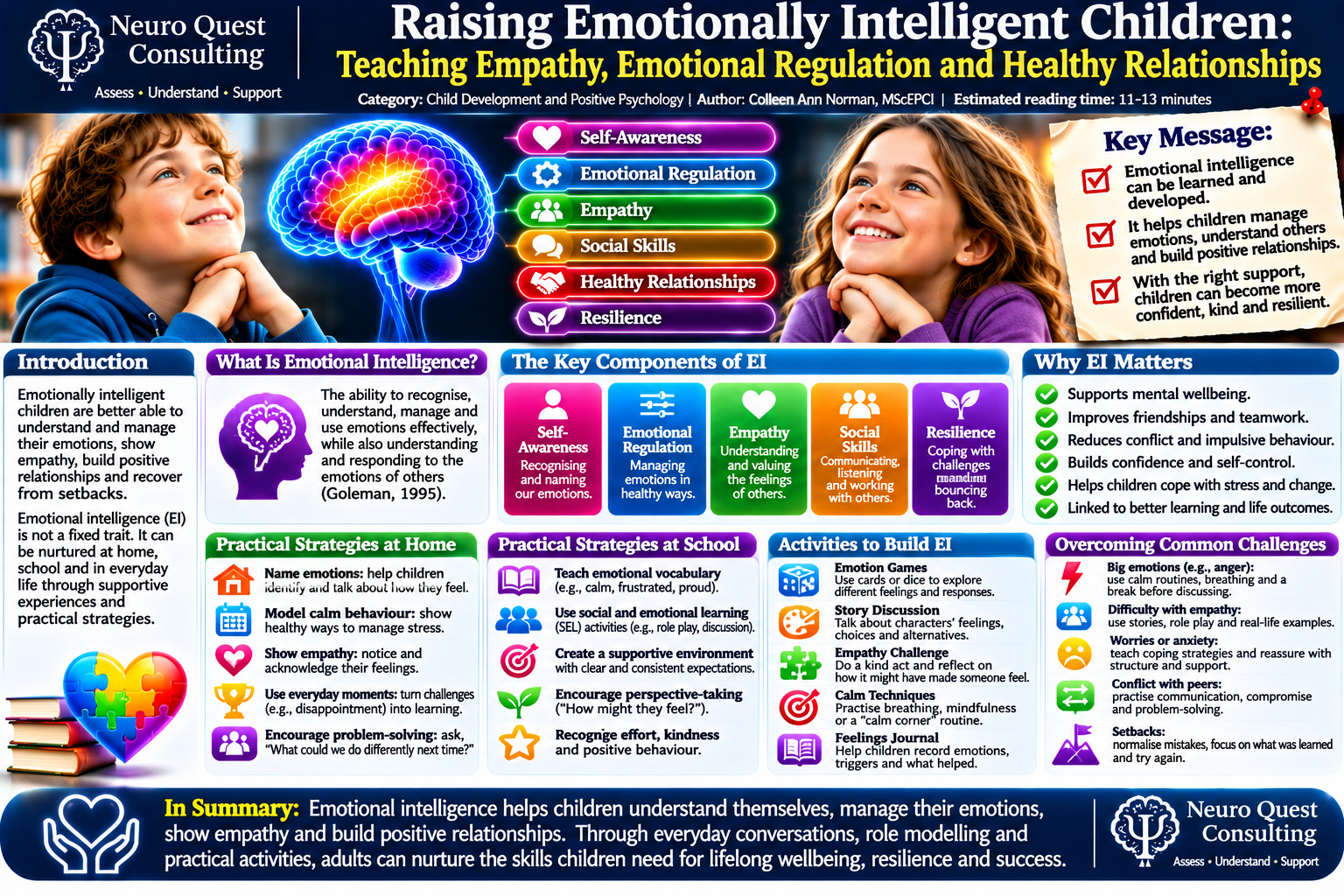
Child Development
Emotional intelligence involves recognising emotions, responding thoughtfully and understanding how others may feel. These skills develop through practice and relationships.
Read articleEdit a local copy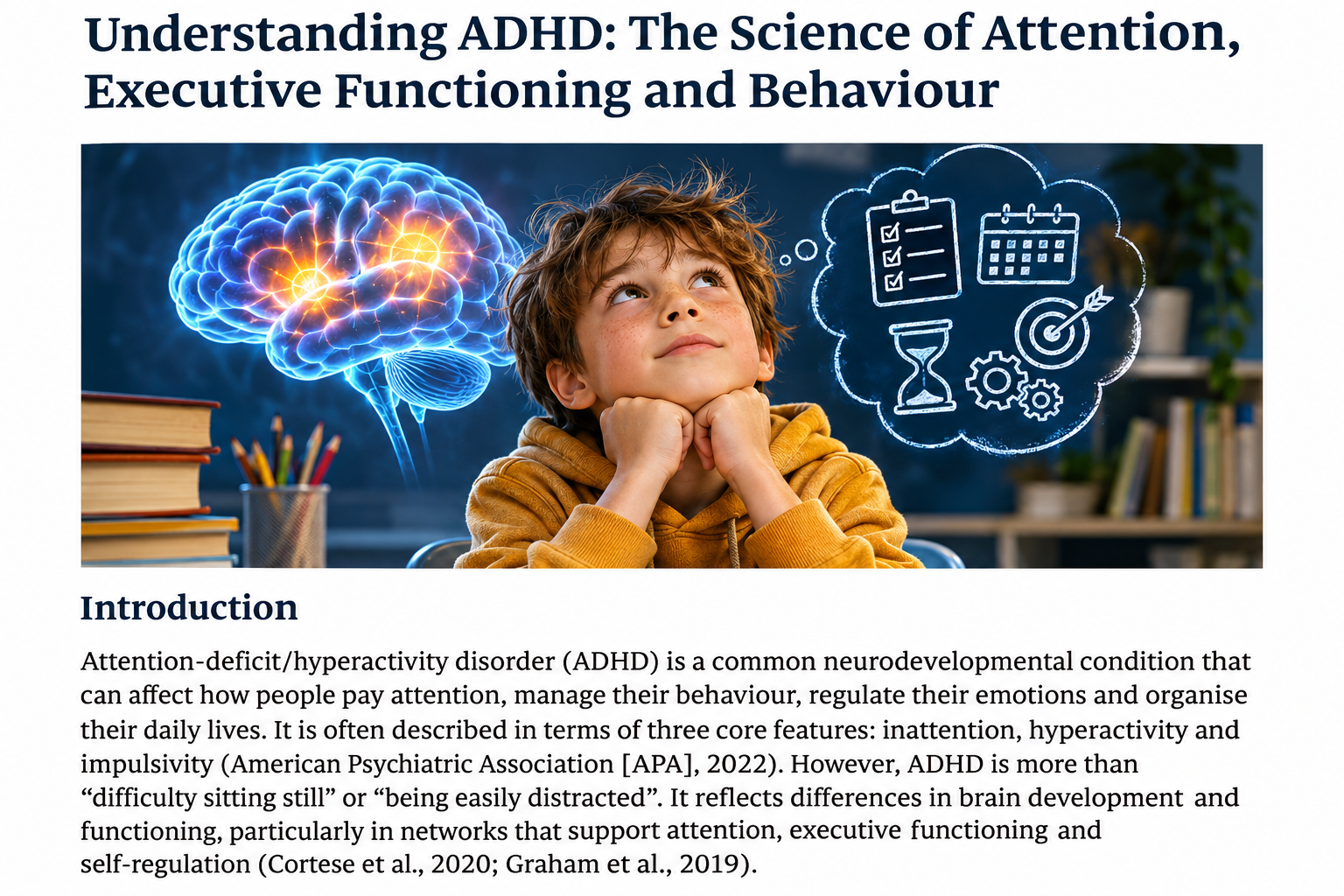
Neurodiversity
ADHD is associated with differences in attention regulation, inhibition and executive functioning, but it cannot be reduced to one brain region or a simple chemical imbalance.
Read articleEdit a local copyNo articles match your search. Try another term or topic.
Article editing is currently local to your browser. To update a public article, its revised text must be included in a new Cloudflare deployment. The Edit a local copy button does not change the live website.
Articles you publish through the local editor appear here in this browser. Public online publishing requires a connected content-management system.